
Last updated November 2, 2026
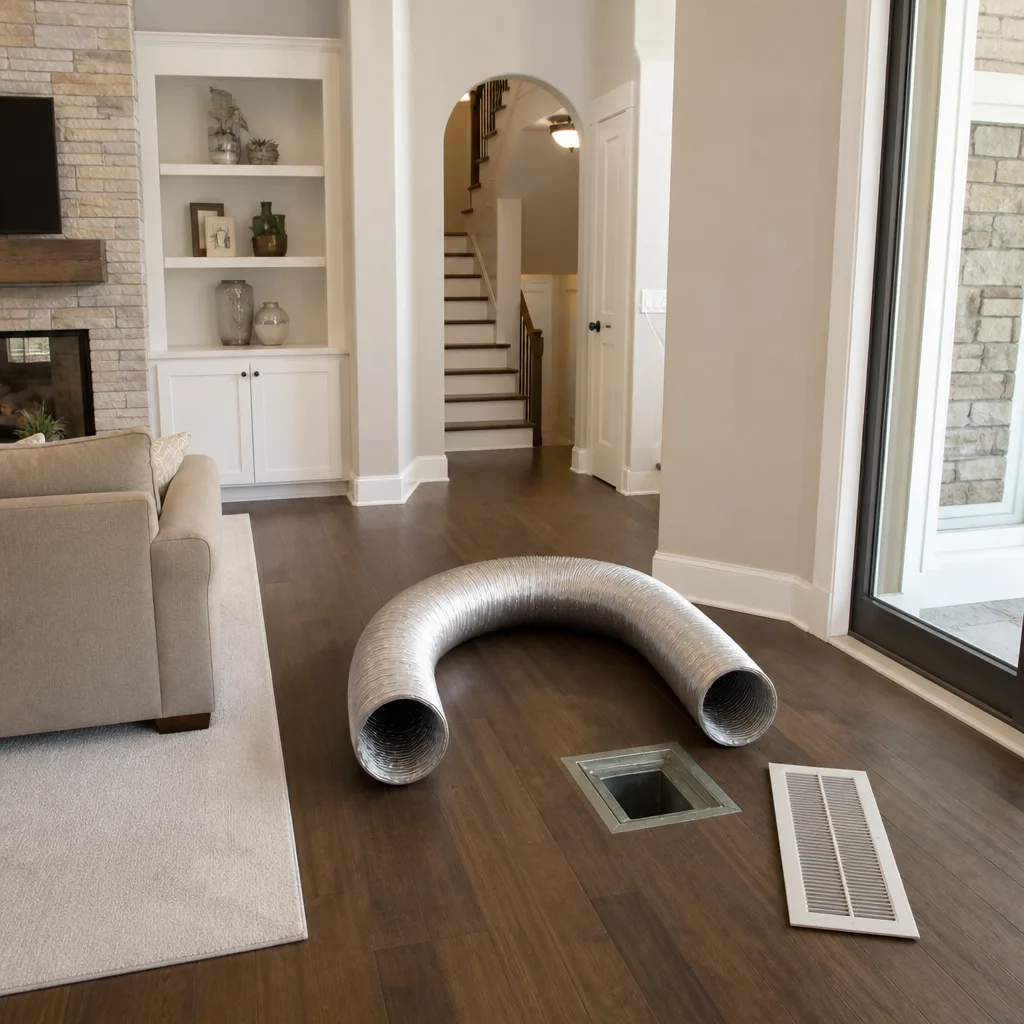 Whole-home duct cleaning
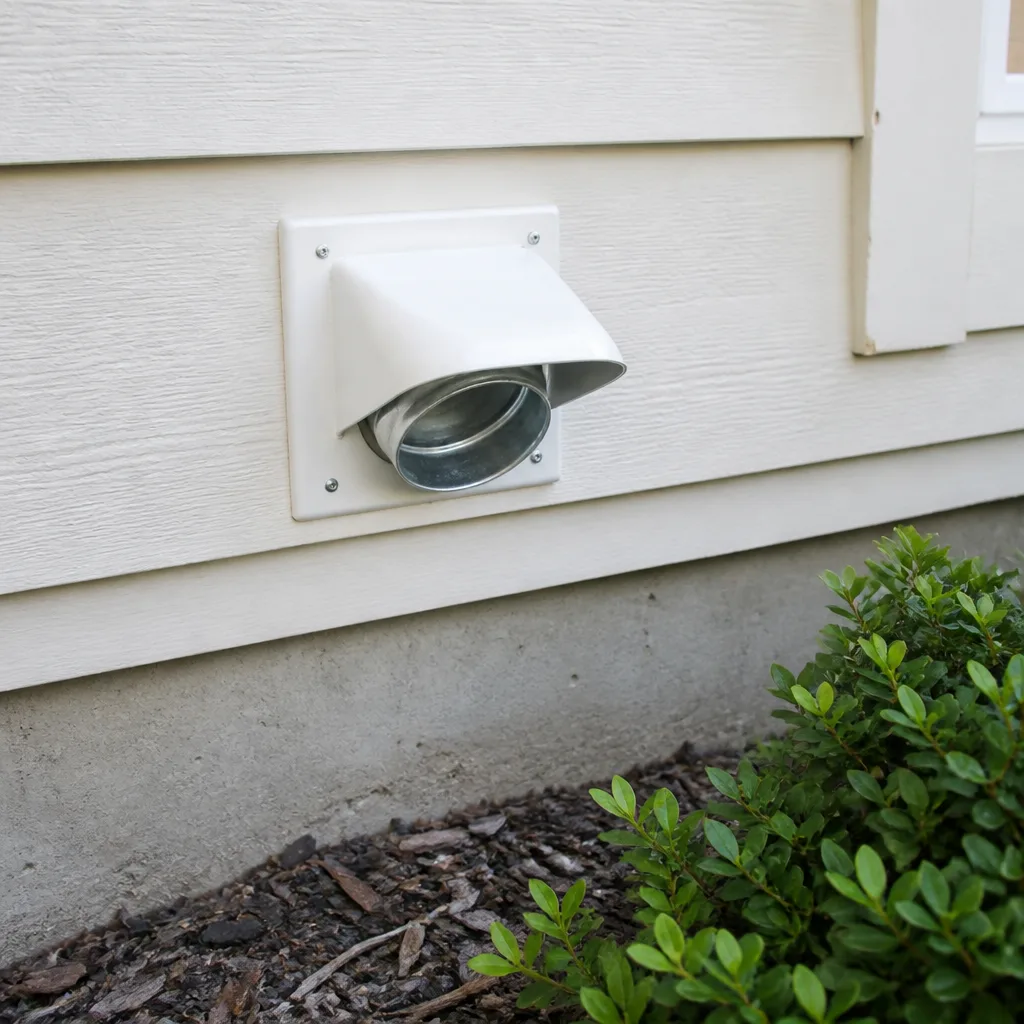 Dryer vent cleaning
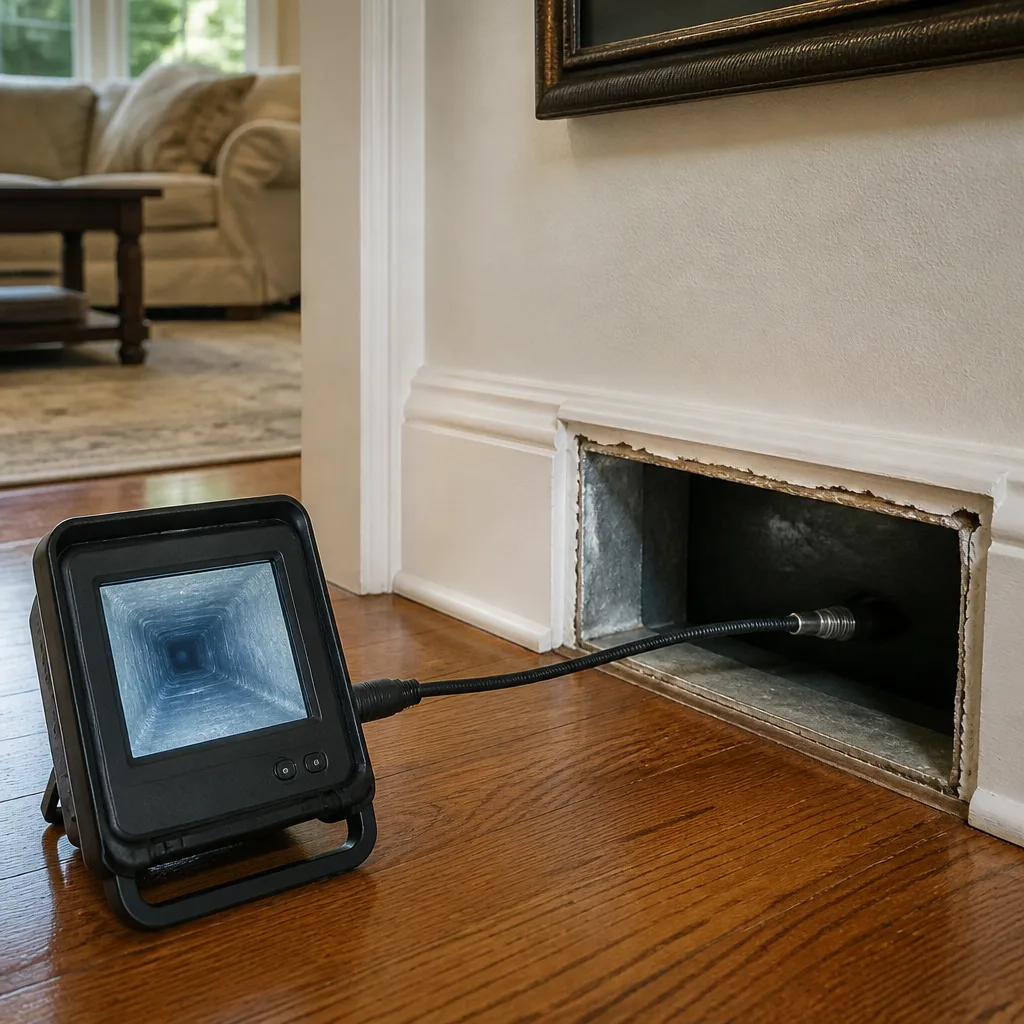 Camera inspection
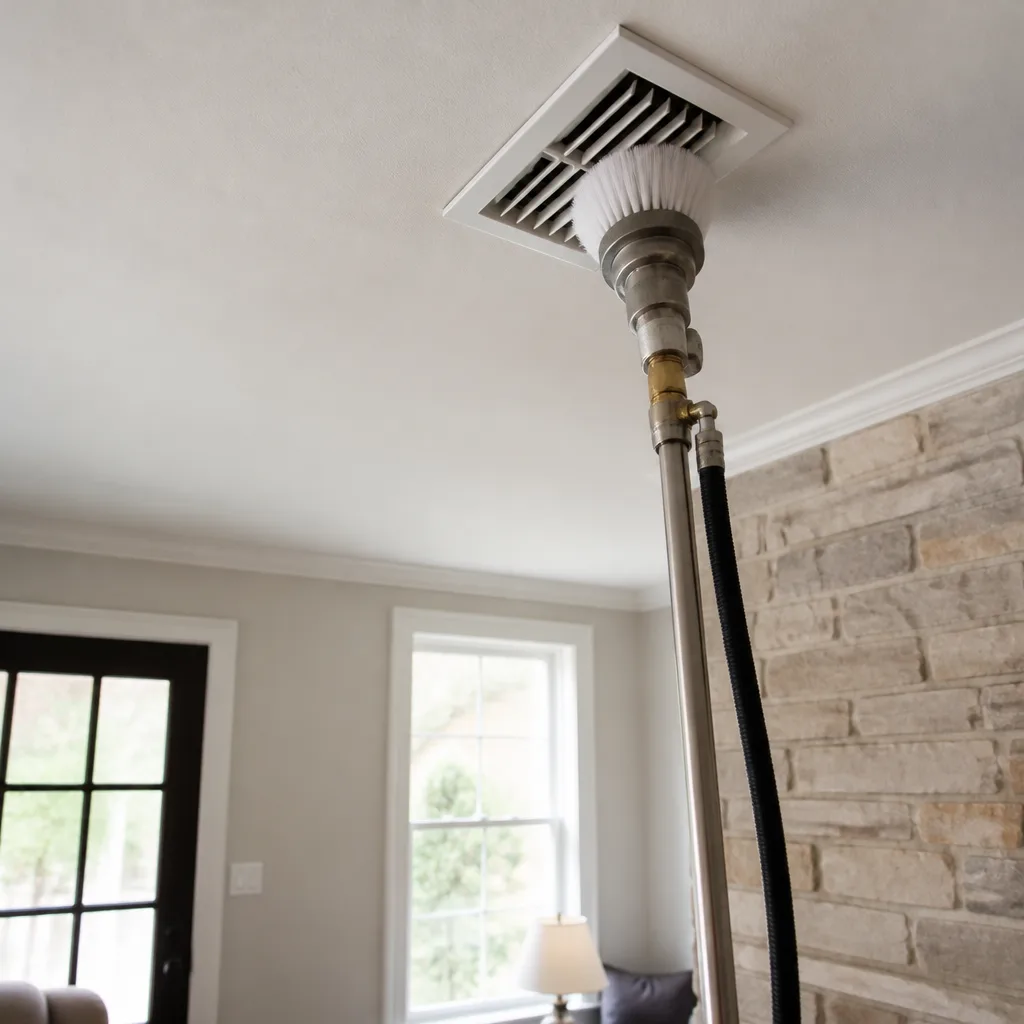 Sanitizing & deodorizing
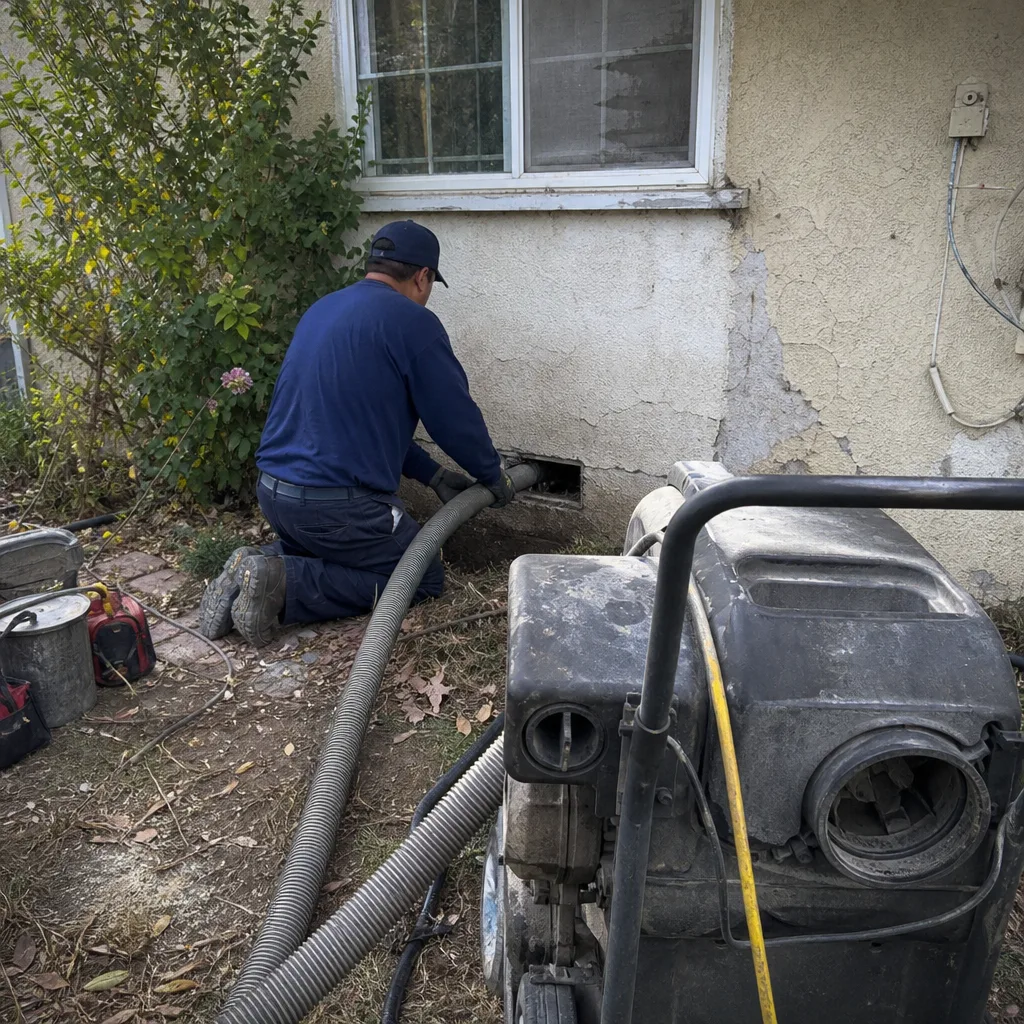
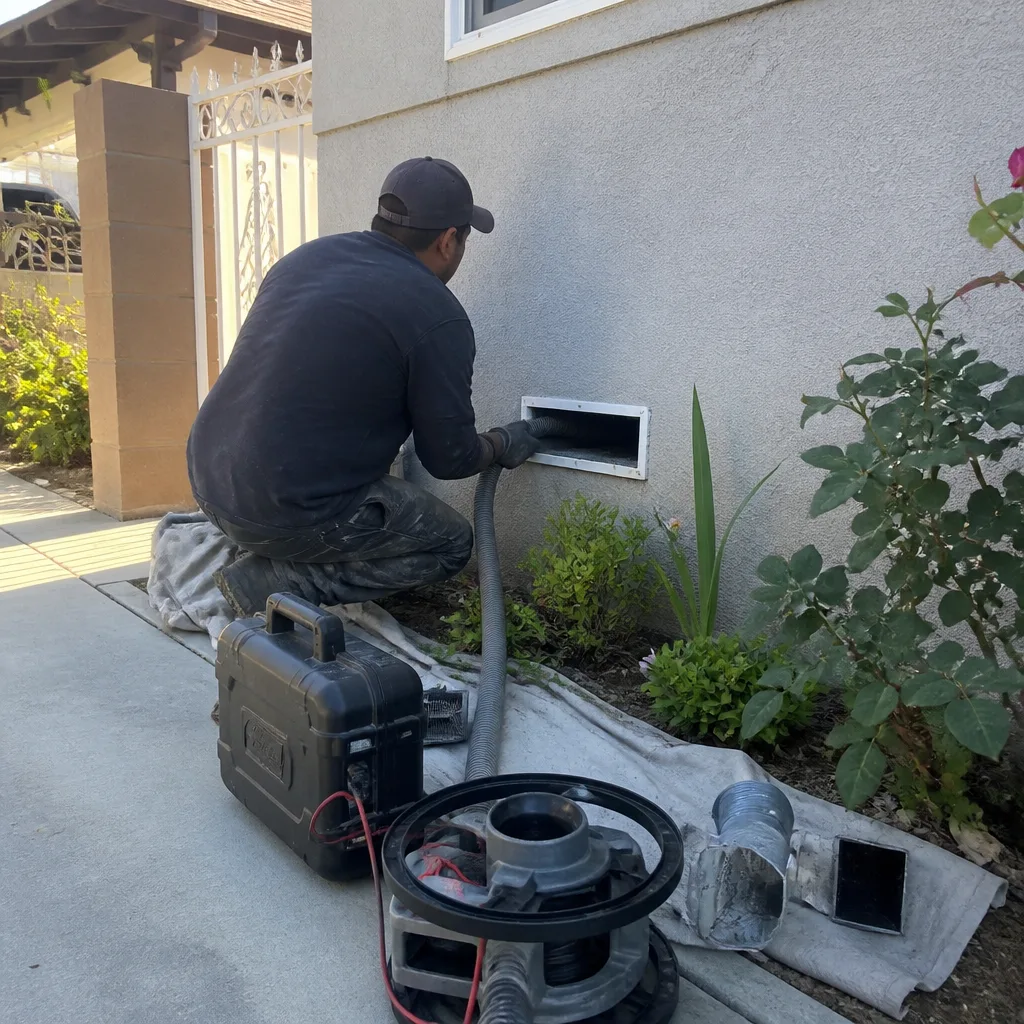
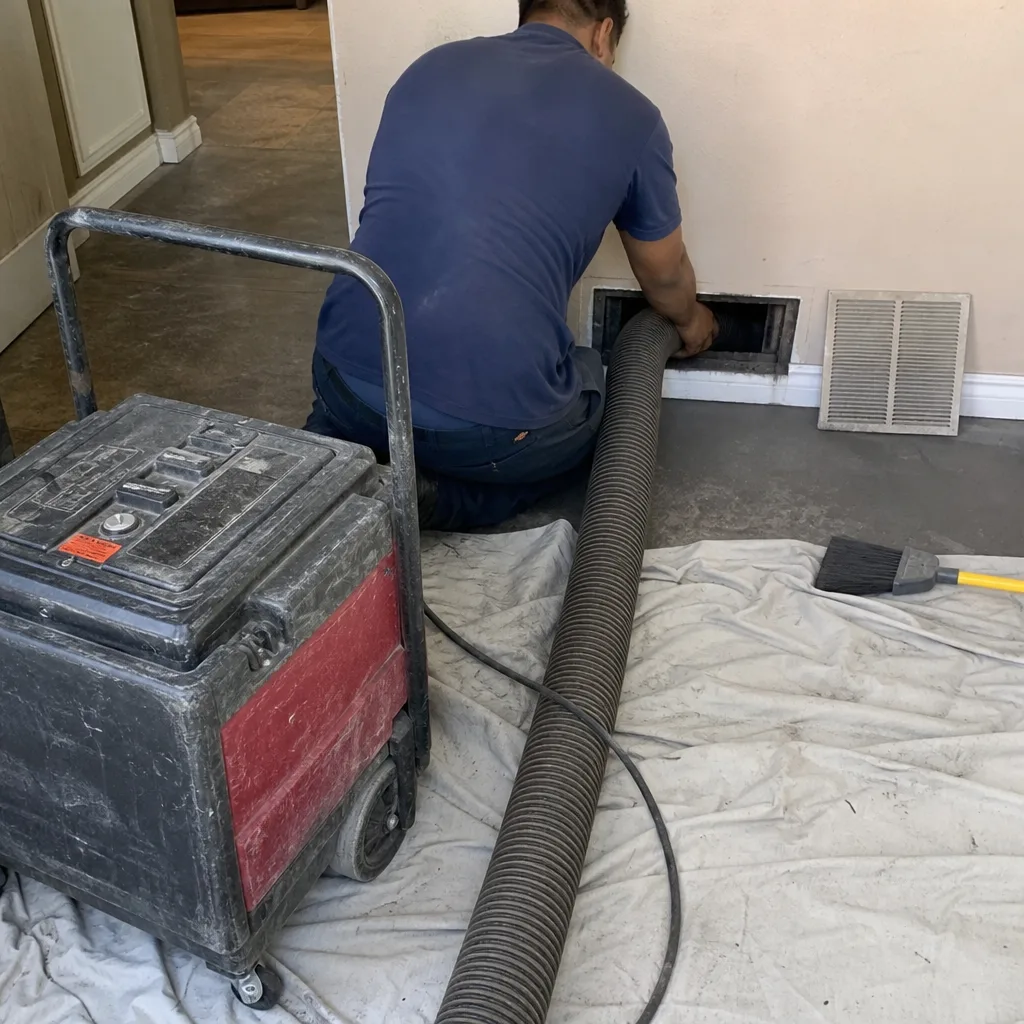
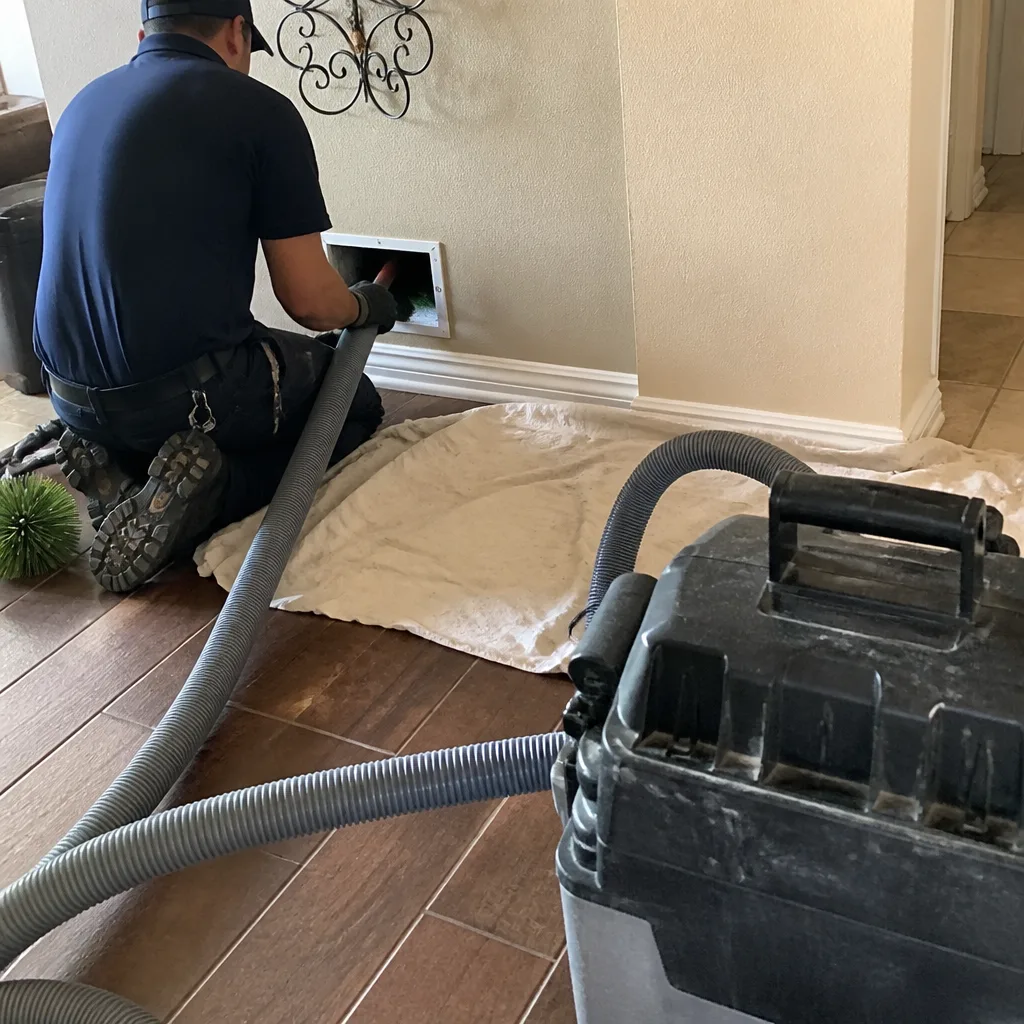
Whole-system duct and dryer vent check with before-and-after photos - you see exactly what came out of your vents
That "$99 whole-house special" is a bait ad - the real number appears once they are in your hallway, or the "clean" is a shop-vac at the register. We photograph the inside of your ducts before and after instead.
Air Duct Cleaning Maintenance Checklist for Reseda Homeowners
Reseda sits in the San Fernando Valley basin, where geography does something specific: it holds air in place. Particulate matter that blows over the Santa Monica Mountains doesn’t always clear out. It settles. During Red Flag conditions, outdoor PM2.5 can spike above 150 µg/m³. Every time your HVAC unit pulls a return, it samples that air and pushes it through a filter that hasn’t been touched since the last fire season. This checklist is built for that reality. It covers what to check monthly, what triggers Air Duct Cleaning, and which filter ratings actually hold up in Reseda air.
Styles & brands we work with
- Whole-home duct cleaning
- Dryer vent cleaning
- Camera inspection
- Sanitizing & deodorizing
Quick Answer
A Reseda air duct maintenance checklist means three things: monthly visual checks of your return grilles and supply registers for ash or debris accumulation, filter changes based on actual valley air quality rather than manufacturer minimums, and a professional cleaning when you see evidence of buildup or your runtime increases. Most Reseda homes with central air should have a professional duct inspection every two to three years, sooner if you live near a canyon mouth or have pets that shed heavily.
Table of Contents
- The Reseda Month-by-Month Task Calendar
- How to Visually Inspect Your Own Return Grilles
- Filter MERV Ratings That Work for Valley Air
- When to Schedule Professional Cleaning: Measurable Triggers
- The Dryer Vent Parallel Checklist
- The Equipment That Actually Matters for Reseda Homes
- Common Mistakes to Avoid
- When to Call a Professional
- Frequently Asked Questions
- The Bottom Line
The Reseda Month-by-Month Task Calendar
Reseda does not have four seasons. It has three: dry heat, Santa Ana wind, and a short cool spell with occasional rain. A generic maintenance calendar from a Midwest HVAC template fails here because it assumes humidity and freezing temps we never see. What we deal with instead is dust loading during wind events, wildfire ash intrusion in late summer and fall, and the spring transition when your system cycles on and off erratically and debris settles in low-flow sections of ductwork.
Here is the calendar we recommend for Reseda homeowners, based on the climate patterns we see year after year:
- January – February: Rain season. Check for moisture staining around register openings. Reseda gets maybe 14 inches of rain in a wet year, but roof flashing failures can drip into duct runs. Rust-colored staining on a supply register means water got in somewhere.
- March – April: Post-rain inspection. Check flex ducts in the attic if accessible. Rodents move into warm attic spaces during cool nights and chew through flex duct jackets. Teeth marks or shredded insulation wrap means a compromised duct that is actively pulling attic air into your living space.
- May: First sustained heat. Replace your filter before the system starts running near-daily. This is the highest-value filter change of the year because the system is about to run the most hours per week it will run all year.
- June – July: Peak runtime. Once a month, hold a tissue near a supply register while the system is blowing. Weak flow half the strength of other rooms usually indicates a disconnected or crushed duct run, not a dirty filter.
- August – September: Fire season begins. This is when we see the heaviest ash loading in Reseda ductwork. Replace your filter monthly, minimum, even if it looks clean. Fire ash is fine enough to pass through a standard fiberglass filter and pile up inside your duct runs instead.
- October: Santa Ana winds. Check exterior vents and intake screens weekly. Wind-driven dust can pack a surprising amount of debris into your air handler cabinet in a matter of 48 hours. If you smell warm dust on startup, that’s what you’re smelling.
- November – December: System cycling season. The on/off cycle lets dust settle in return ducts during off periods. Vacuum return grilles and replace filters as the season shifts. This is also when we recommend scheduling any professional cleaning, since the system is accessible and the work won’t interrupt cooling.
How to Visually Inspect Your Own Return Grilles
You don’t need to remove ductwork to know whether your system is carrying debris. The return grilles tell you most of what you need to know, and they take about five minutes to check.
Start by turning the system off for 20 minutes. Air movement will kick lightweight particles into suspension and make any accumulated material harder to see. Once settled, inspect each return grille in the house. In Reseda, the most common return placement is a central hallway return with secondary returns in master bedrooms. Older Sherman Oaks-adjacent tracts often have jump ducts rather than dedicated returns, so know what you have before assuming a room lacks return airflow.
- Look at the grille face itself. Ash and fine dust leave a gray film on the louvers. If you wipe a white cloth across the grille and get a dark gray smear, fine particulate has been moving through this opening.
- Shine a flashlight behind the grille. You’re looking for any visible accumulation on the interior wall of the duct boot. A thin gray coating is normal. A clumpy or textured buildup is not.
- Check the filter condition through the return opening. If the filter is bowed inward or shows a thick dust pattern, it has been overloaded. A bowed filter means resistance has increased enough that the blower is working harder than it should.
- Look for moisture staining. Any rust-colored drip pattern or dark ring on the drywall surrounding the return opening means condensation or water intrusion has occurred. This is a repair issue, not a cleaning issue.
In our experience, return grilles in Reseda homes near the 101 corridor collect road grime faster than homes further into the valley floor. Brake dust and tire particulate from the freeway find their way into the return side of the system, and it shows up as a black, oily film rather than gray dust. If you wipe your grille and the cloth comes back black rather than gray, that’s brake dust and exhaust particulate, and it warrants more frequent filter changes than the calendar typical for your square footage.
Filter MERV Ratings That Work for Valley Air
Most HVAC manufacturers print a filter recommendation on the unit itself, usually MERV 8 or lower. That number reflects what the blower can handle at baseline static pressure, not what works for the air quality outside your home. Reseda air during Santa Ana wind events carries a coarse dust load that will clog a MERV 8 filter in under two weeks.
For Reseda, we recommend a minimum of MERV 11, with MERV 13 as the standard for homes with allergy-sensitive occupants or anyone with asthma or COPD. A MERV 11 filter catches roughly 85% of particles in the 3 to 10 micron range, which is where most wind-blown dust and ash live. A MERV 13 catches finer particles, down to 1 micron, at the cost of slightly higher airflow resistance.
The tradeoff on higher MERV ratings is real. A MERV 13 filter is denser, which means more drag on the blower. If your system is older or has marginal static pressure, a MERV 13 filter can reduce airflow enough to cause coil freeze-up during peak summer. The practical answer for most Reseda homes is MERV 11 with monthly changes during fire season, dropping to every two or three months in the cooler months when runtime drops.
If you want better filtration without starving the blower, a Honeywell media cabinet running a MERV 13 or higher media filter solves the pressure problem by increasing the filter surface area. We install and stock those for Reseda homes where the homeowner wants serious particulate capture without sacrificing airflow. The surface area rule is simple: a 4-inch media filter has roughly four times the filter media of a 1-inch filter at the same MERV rating, so the pressure drop stays manageable.
When to Schedule Professional Cleaning: Measurable Triggers
Arbitrary annual reminders are a guess. What actually works is watching for measurable evidence that your ducts are carrying material they shouldn’t, as covered in our Air Duct Cleaning Troubleshooting: Common Problems and How to Fix Them. Here are the triggers we tell Reseda homeowners to watch for:
- Visible debris at supply registers. If you see dark specks or lint-like material on the wall or floor surrounding a supply register, that material has been blown out of the duct itself. It’s not coming from anywhere else.
- Gray dust film returns within 48 hours of dusting. This is the single most common complaint we hear from Reseda homeowners. Fine dust settles on furniture, you wipe it down, and it reappears two days later. That dust is being distributed from inside the duct system every time the air handler runs.
- Allergy onset that coincides with system runtime. If someone in the household has allergy symptoms that appear when the HVAC runs and improve when it’s off, the system is almost certainly distributing an allergen load. This frequently starts after a windy season or fire event.
- Uneven airflow between rooms. One or more rooms under-conditioned relative to others, with no change in thermostat setting, often indicates debris accumulation in specific branch ducts or a disconnected section.
- Audible debris. Hearing what sounds like grains of sand moving through duct runs on startup is fine particulate being dislodged. That’s material that got in through a gap or was pulled through an inadequate filter.
- Post-remediation or post-construction. If you’ve had drywall work, flooring work, or attic insulation work done in the last six months, construction dust has entered the system. This dust is fine enough to pass through most filters and settle in the duct runs.
Any two of these triggers occurring together means a professional cleaning is justified. A single trigger that persists for more than two filter changes is worth at least an inspection; see our guide on Air Duct Cleaning Permits, Codes & Inspections in CA: What You Need to Know.
The Dryer Vent Parallel Checklist
Your dryer vent is a maintenance item that runs on the same schedule as your HVAC ducts, and in Reseda it carries a fire risk that deserves more attention than it gets. Lint accumulates in the vent pipe over time, reducing airflow and trapping heat. The combination of lint fuel and heat retention is the mechanism behind thousands of residential dryer fires every year. This is not hypothetical: the U.S. Fire Administration reports that dryer vent fires account for roughly 2,900 residential fires annually.
Here is the parallel checklist to run every six months in a Reseda home:
- Inspect the lint trap housing. Remove the lint screen and shine a flashlight into the slot. Lint buildup on the walls of the housing itself means the screen isn’t catching everything, and some of that lint is going downstream.
- Check the exterior vent cap. Go outside and look at where the dryer vents. A functioning flap should open when the dryer is running and close when it isn’t. If the flap is stuck open, birds and rodents can enter. If it’s stuck closed, airflow is restricted.
- Note dry time changes. If a load that used to dry in 45 minutes now takes 70, the vent pipe is partially obstructed. This is the earliest warning sign, and it shows up months before a full blockage.
- Smell the vent exhaust while the dryer runs. Warm, humid air that smells like burned lint or old fabric means material is charring inside the pipe. This is a call-today scenario.
Dryer vent cleaning in Reseda is a service we run as a standalone specialty, not an add-on. The vent run in most Reseda homes is between 6 and 15 feet, and the cleaning takes under an hour when the line is accessible. When it isn’t, we have the tools to clear it anyway.
The Equipment That Actually Matters for Reseda Homes
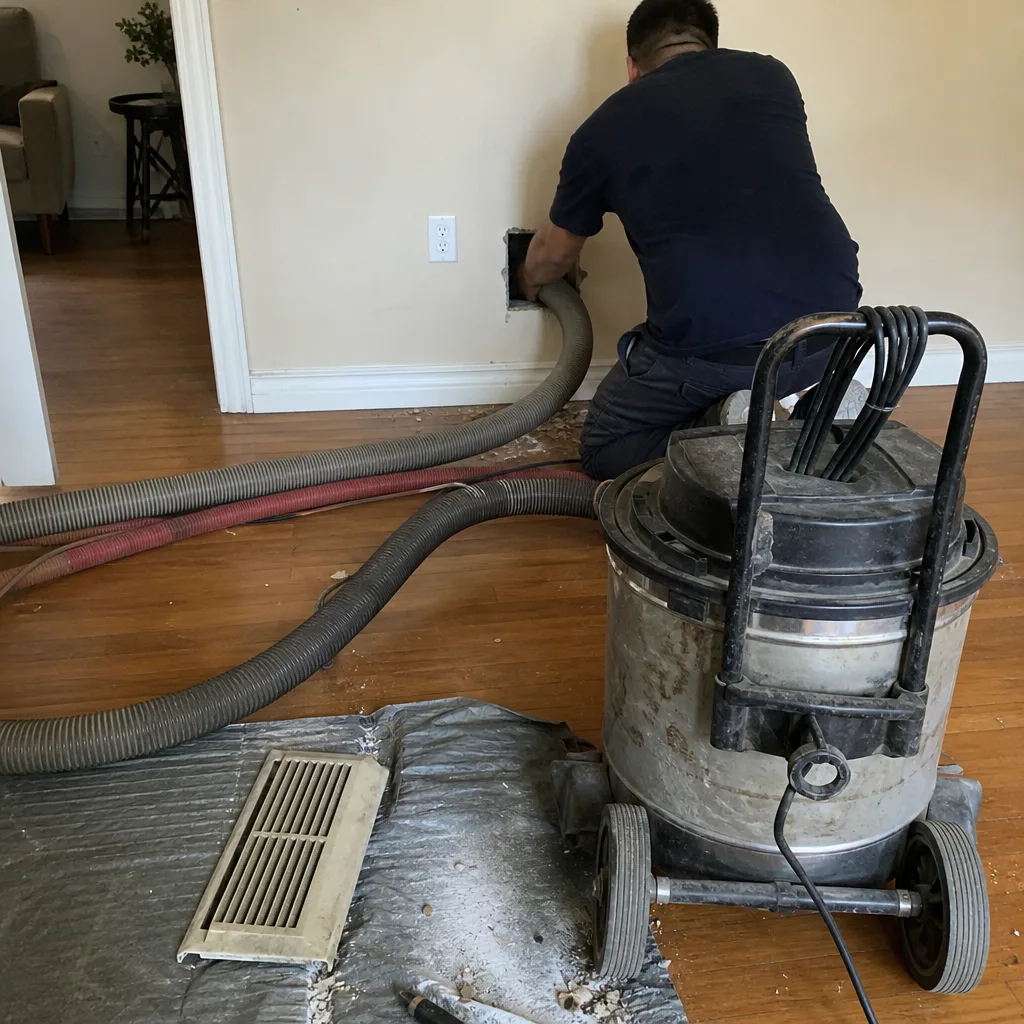
Most generalist HVAC outfits clean ducts with a shop vac and a brush attached to a drill. That approach removes the loose surface layer and leaves the compacted stuff in place. Duct debris in the San Fernando Valley is not loose surface layer material. The dust that settles during a Santa Ana event has been baked by 95-degree attic heat, mixed with fine ash, and compacted by months of airflow. It doesn’t vacuum off. It has to be dislodged mechanically.
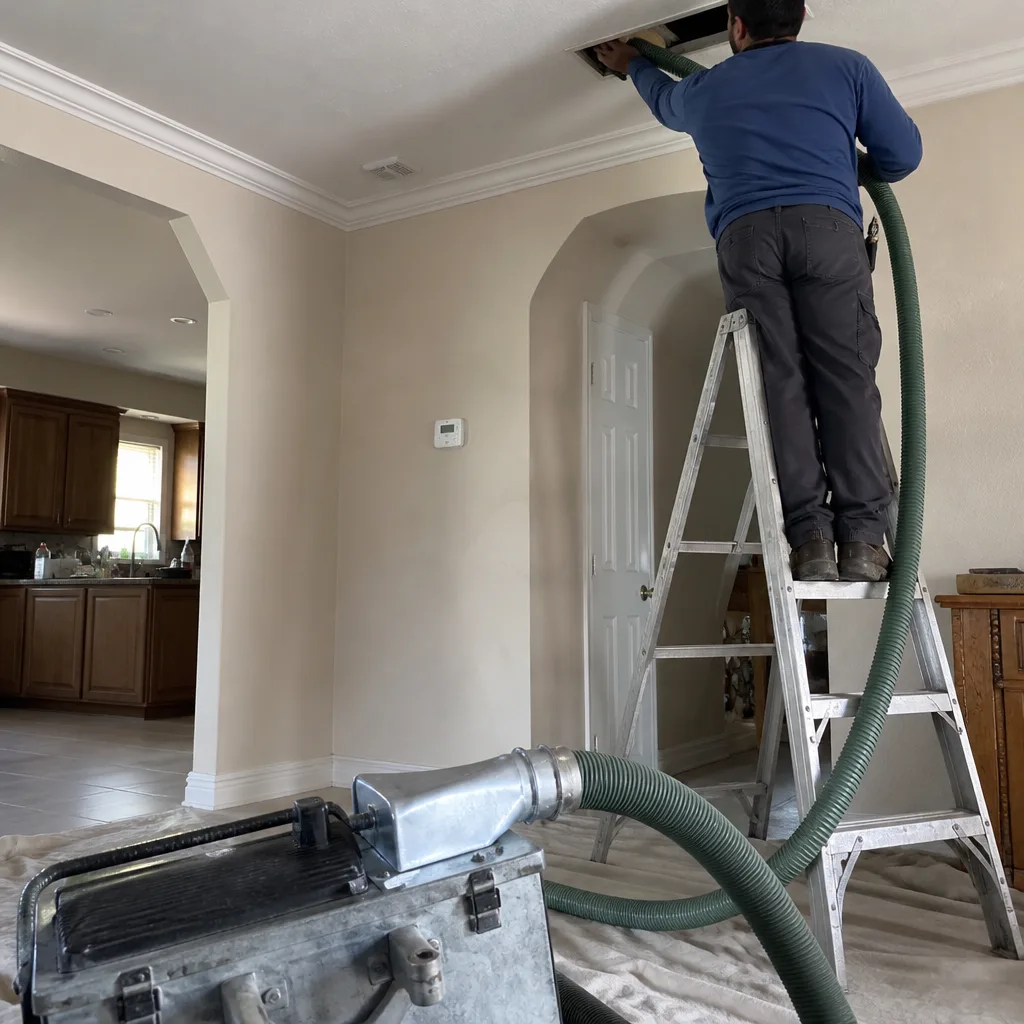
This is why a Rotobrush system is the core of our air duct cleaning in Reseda. The rotary brush spins at high speed while a HEPA-filtered vacuum runs in tandem, dislodging compacted debris and pulling it out of the airstream at the same time. It doesn’t push dust around hoping the vacuum catches it; the brush is inside the duct run doing the physical work. A Nikro vacuum system handles the airborne extraction end, keeping the negative pressure on the duct line so particles don’t escape into the living space during the work.
Containment matters as much as the cleaning itself. That’s the piece most homeowners don’t think about until they see dust on furniture after a cleaning job. Abatement Technologies equipment is built for contaminant abatement work, where letting particles escape is not acceptable. We run that same containment standard in residential homes during air duct cleaning in the Reseda home environment, because pushing loose particles out of the duct and into the room you’re trying to improve defeats the point.
The combination of Rotobrush for mechanical agitation, Nikro for extraction, and Abatement Technologies for containment is what separates a real duct cleaning from a blow-and-go job that leaves half the debris in the system.
Common Mistakes to Avoid
- Using a washable electrostatic filter as a long-term solution. Washable filters are convenient but rarely rated above MERV 8 and lose efficiency after repeated washing. In Reseda air, they clog fast and under-filter consistently.
- Assuming a new filter means clean ducts. The filter catches what passes through the return side. It does nothing for debris already accumulated in branch ducts or supply runs. A clean filter on a dirty system still distributes dirty air.
- Ignoring the dryer vent until the dryer stops drying. By the time dry time doubles, the vent is significantly obstructed and has been operating at elevated temperatures for months. The efficiency loss is the least expensive part of that equation.
- Choosing a cleaning service based on a low per-vent price. Per-vent pricing tends to inflate dramatically once the tech is in the home. One flat price per system agreed before work starts is the only pricing model that prevents surprise invoices.
- Sealing every leak with duct tape. Duct tape fails in attic heat. It dries out, loses adhesion, and falls off. If you’re doing a temporary repair, use foil tape or mastic. Better yet, call for a proper air duct repair in Reseda and fix it once.
- Waiting for a Red Flag warning to change a filter. By the time the warning is issued, the system has already been running through smoky or dusty air. The filter change needs to happen before wind events, not during them.
- Running the system with a clogged filter to “let it breathe” until a replacement arrives. A clogged filter increases static pressure and makes the blower work harder. It does not improve airflow or air quality. The system runs better with no filter than with a fully loaded one, and the right answer is a replacement that day.
When to Call a Professional
If you’ve done the visual inspection and found gray film on your return grilles, visible debris at supply registers, or dust that reappears within two days of wiping down furniture, you have enough evidence to justify a professional cleaning. If you smell warm dust on startup, that’s a sign of significant accumulation in the heat exchanger or duct runs. If your dryer taker longer to dry a standard load than it did six months ago, the vent line needs service. In any of these scenarios, the fastest path is an inspection with commercial-grade equipment. Air Duct Cleaning Reseda offers free estimates in Reseda. Call (855) 353-1653 and we’ll assess your system with the same Rotobrush, Nikro, and Abatement Technologies equipment we use on every job.
Frequently Asked Questions
Air duct cleaning in Reseda typically costs $350 to $650 for a full-home system, depending on square footage, system accessibility, and the number of returns. One flat price per system agreed before work starts is the pricing model to look for. Per-vent pricing tends to be where bait-and-switch operators hide their markup. Call (855) 353-1653 for an exact quote. Estimates are free.
Cheaper quotes usually reflect cheaper equipment: a shop vac on a truck instead of a rotary brush system with HEPA extraction. The labor time is shorter, the agitation is minimal, and the debris that stays in the system is the point. A Rotobrush run takes longer and costs more because it’s actually removing compacted material. If a quote is less than half the market rate, ask what brand of equipment is being used and whether the price is per vent or per system.
Before-and-after photos of the return boot, supply register interiors, and main trunk line taken during service are the standard form of verification. Request photos of the specific runs that showed the most accumulation rather than the cleanest section. A legitimate operator will also show you the debris pulled from the system, and the Nikro extraction systems we run leave a HEPA-filtered canister full of what was removed.
Every two to three years for most Reseda homes. Homes closer to the 101 or 405 corridors, homes with shedding pets, and homes that went through a nearby fire event may need it annually. A visual inspection after a Red Flag season is the best way to know. If the return grille wipes gray or black and dust returns within 48 hours of cleaning surfaces, the interval has elapsed.
No. A better filter catches more at the return, but it does nothing for debris already accumulated in the branch lines, supply runs, or return duct itself. A MERV 13 filter will slow the rate of new accumulation, and it will improve the air being distributed. It does not clean the system. Filter upgrades and duct cleaning are complementary, not interchangeable. We stock Honeywell media cabinets for Reseda homeowners who want the filtration upgrade in the same visit as a cleaning.
Household vacuums lack the static pressure and filtration to pull particulate from a full duct run, and the brushes you can attach to a drill are too short to reach the full length of a branch line. The Rotobrush system we run reaches the full duct run while the Nikro vacuum maintains negative pressure. Without negative pressure and proper containment, a DIY attempt dislodges debris into your living space. If you want to save money, the visual inspection and filter management are where DIY effort pays off. Leave the duct interior to professionals with the right equipment.
The Bottom Line
Duct maintenance in Reseda is a function of this valley’s specific climate: Santa Ana dust loading, fire season ash intrusion, and the on/off cycling that lets particulate settle in low-flow duct sections. A month-by-month calendar built around those patterns, filter changes based on MERV ratings calibrated to real air quality, and visual inspections that give you evidence rather than guesswork will keep your system running clean. When the visual evidence says it’s time, a professional cleaning with rotary brush agitation and HEPA extraction is the only method that actually removes what has accumulated. Reseda air is not generic air. Your maintenance plan shouldn’t be either. For more guides & resources, visit our blog.
Written by the team at Air Duct Cleaning Reseda, serving Reseda since 2011.
See the difference
 Before
 After
 Before
 After
 Before
 After