
Last updated November 2, 2026
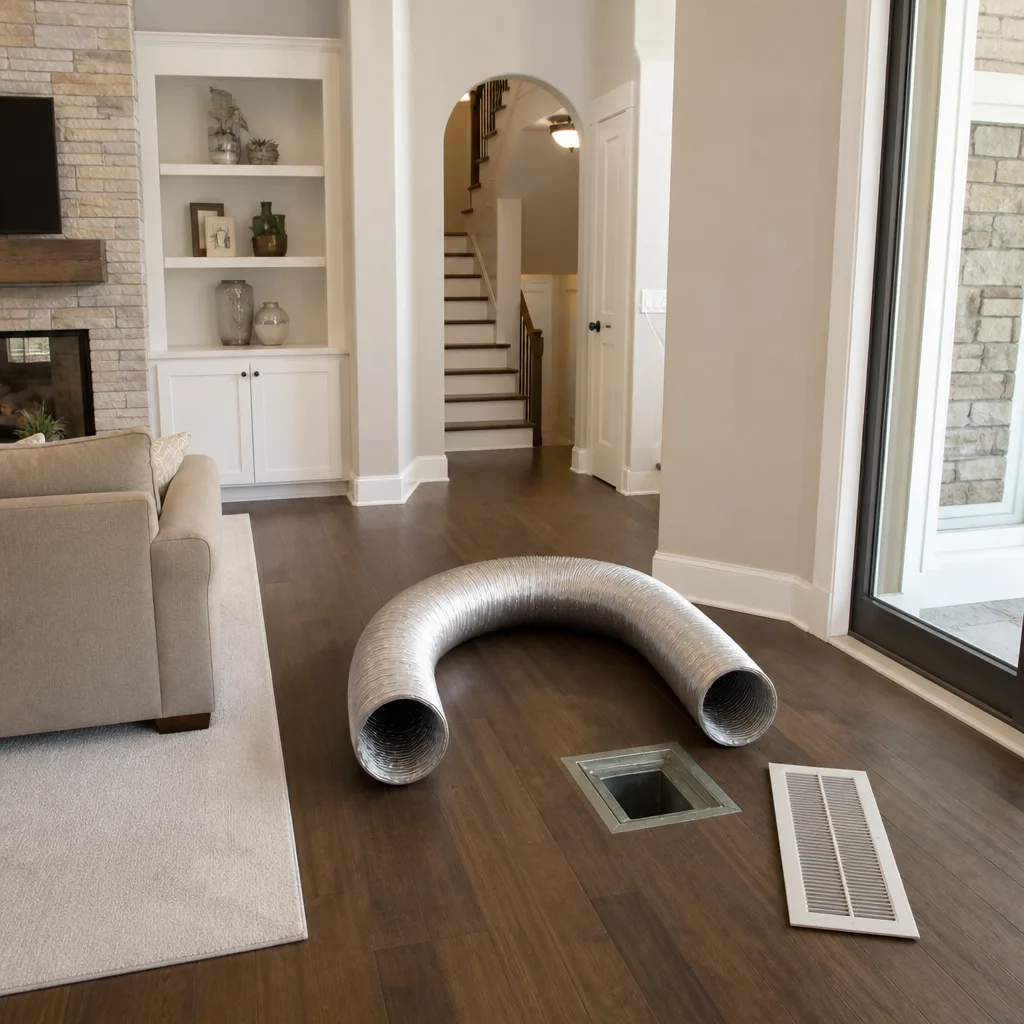 Whole-home duct cleaning
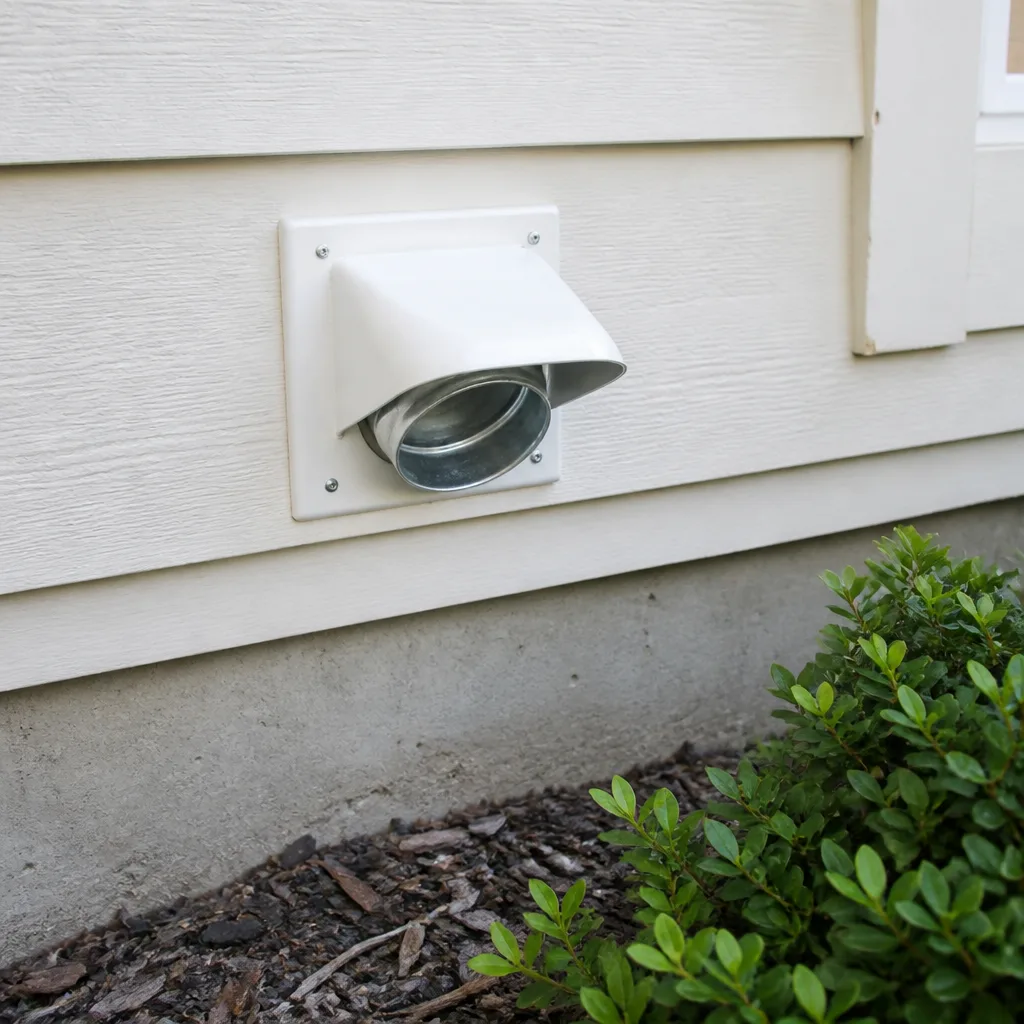 Dryer vent cleaning
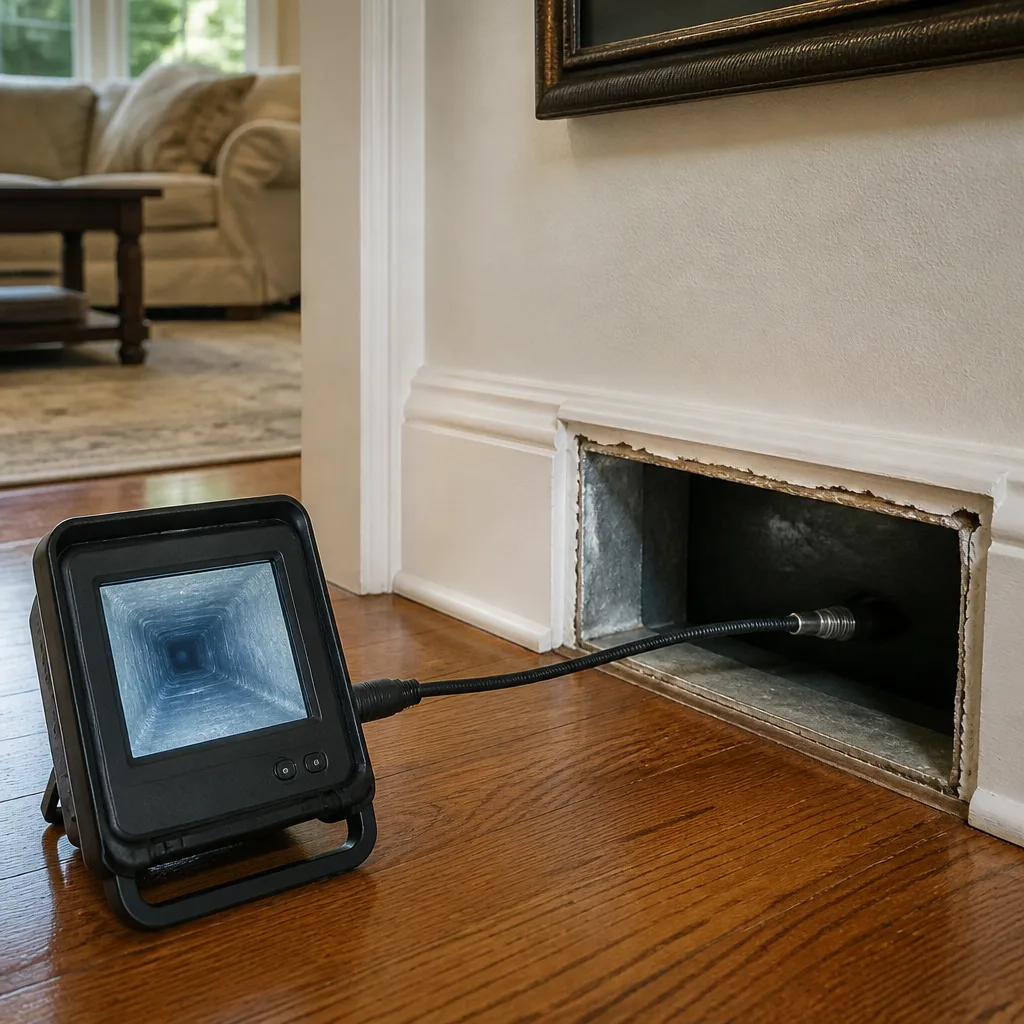 Camera inspection
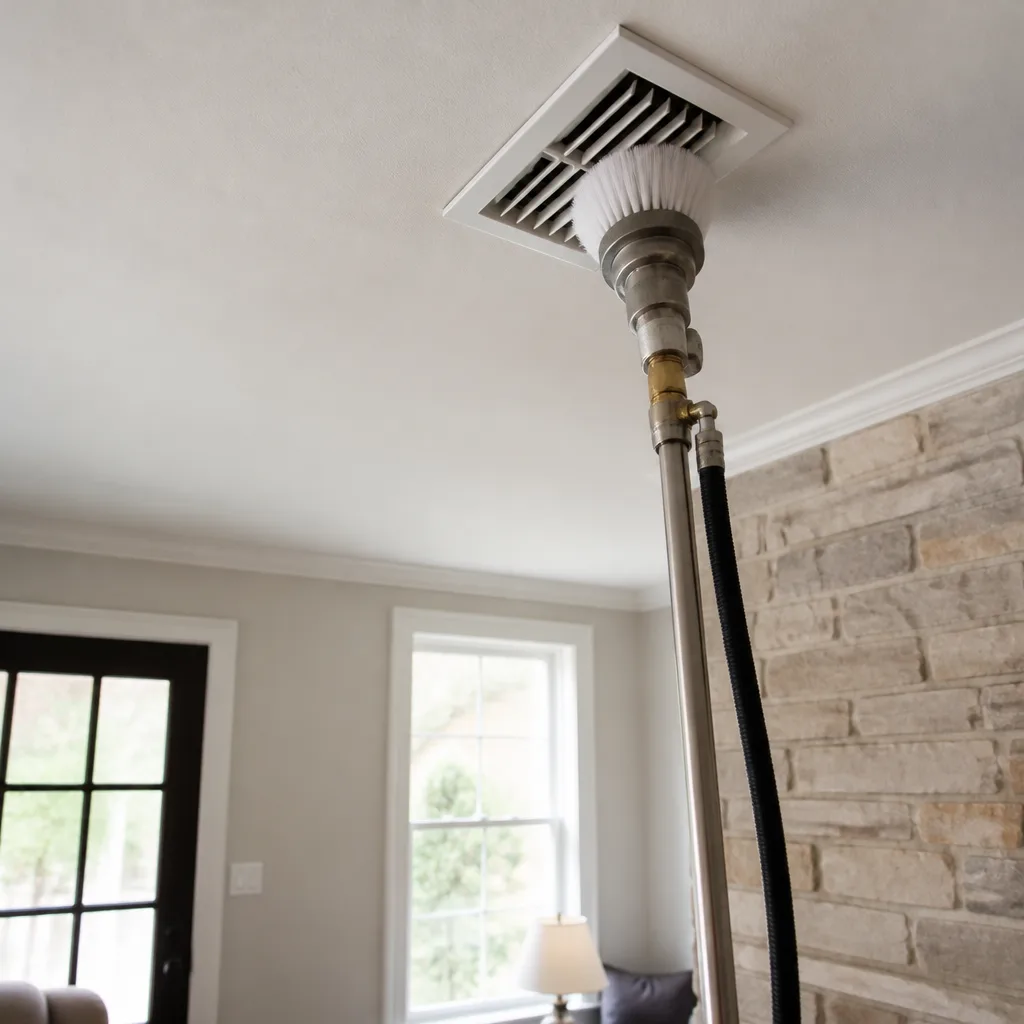 Sanitizing & deodorizing
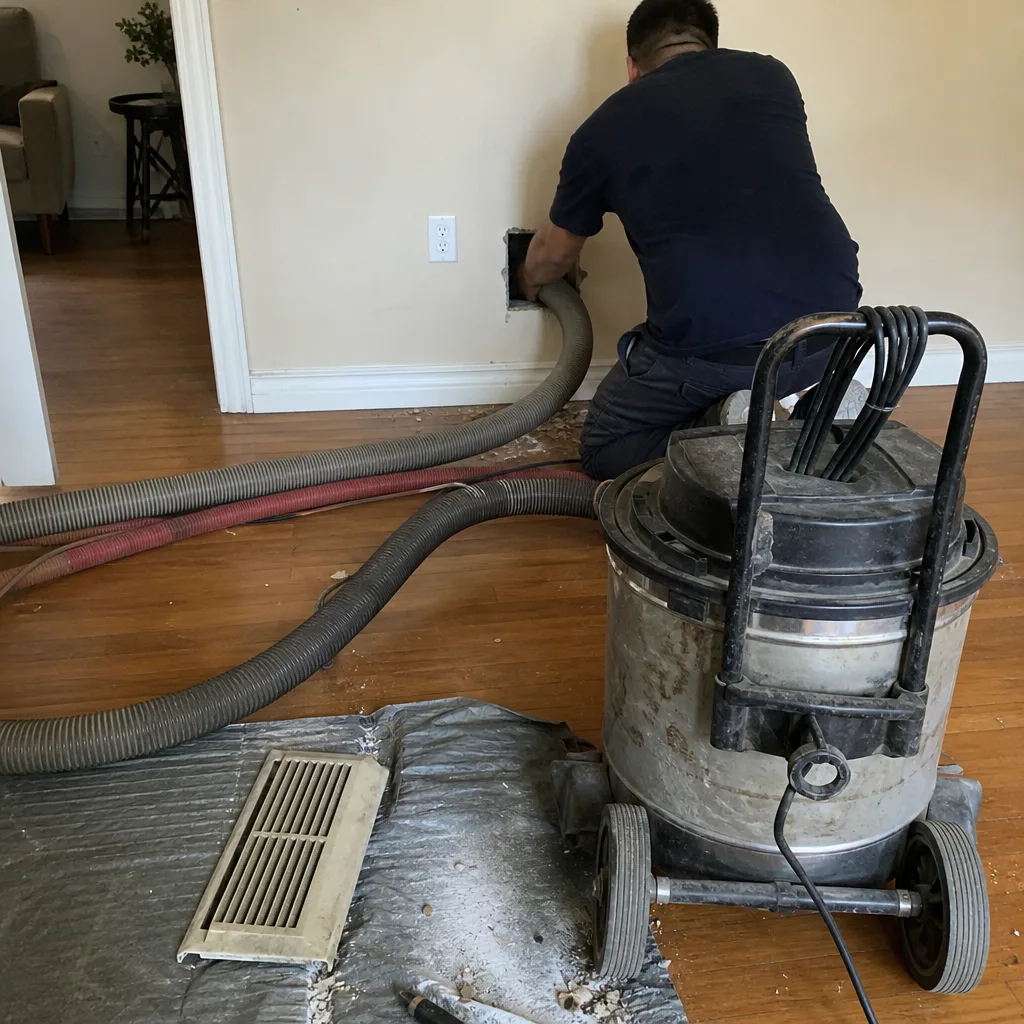
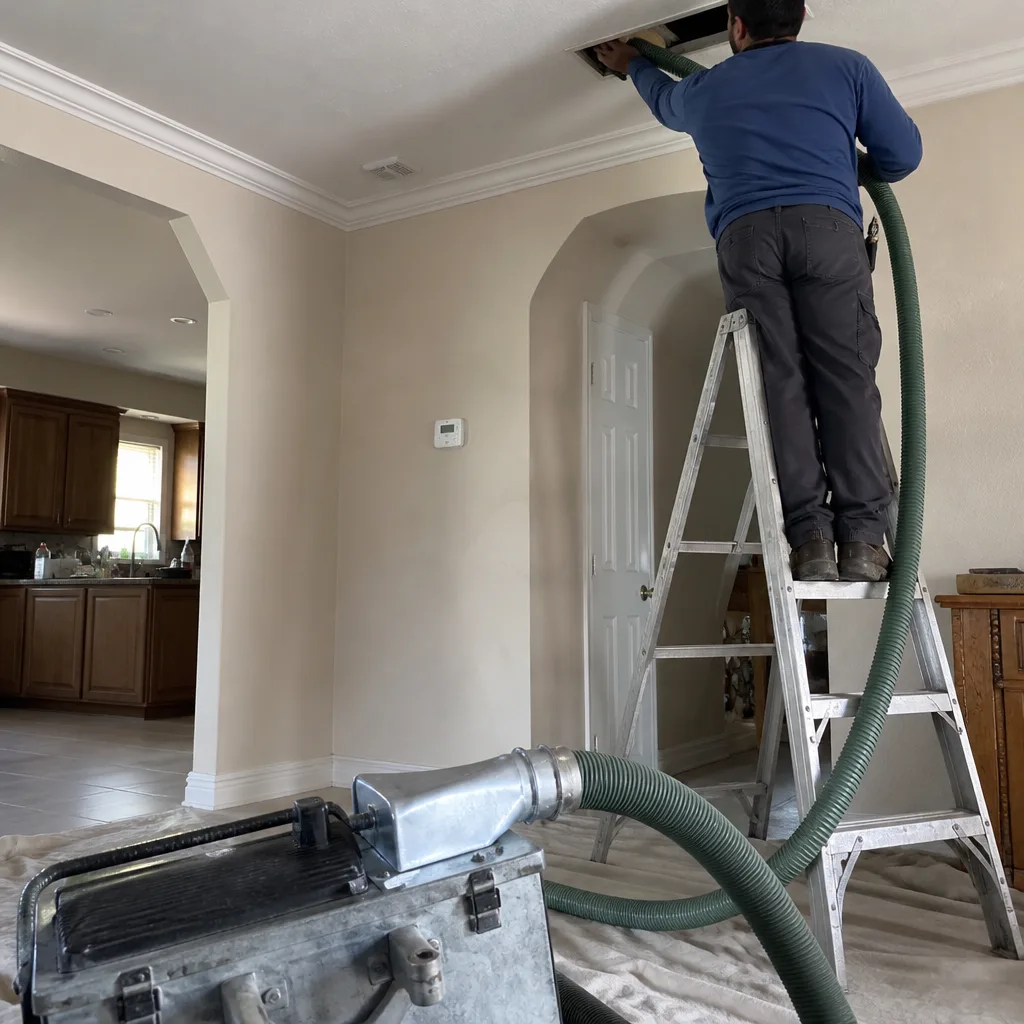
Whole-system duct and dryer vent check with before-and-after photos - you see exactly what came out of your vents
That "$99 whole-house special" is a bait ad - the real number appears once they are in your hallway, or the "clean" is a shop-vac at the register. We photograph the inside of your ducts before and after instead.
Air Duct Cleaning Emergency Preparedness Guide for Reseda Homes
After the Woolsey Fire, air quality monitoring in the San Fernando Valley recorded AQI readings above 300 for four consecutive days. Every home in Reseda with a running HVAC system during that period pulled that air through its ductwork. The ash, heavy metals, and combustion byproducts that deposited inside those systems didn’t leave when the AQI dropped. They sat there, in the return plenum, on the evaporator coil, and along the interior walls of every supply run, waiting to be recirculated through the house every time the blower kicked on. This guide covers the emergency protocol most homeowners don’t have: what to do with your ductwork in the 24 hours after a wildfire smoke event, an earthquake, or a renovation project that just kicked drywall dust through your return air.
Styles & brands we work with
- Whole-home duct cleaning
- Dryer vent cleaning
- Camera inspection
- Sanitizing & deodorizing
Quick Answer
Disable your HVAC system when the outdoor AQI exceeds 150 during a wildfire smoke event, keep it off for 24 to 48 hours after the smoke clears, and schedule a professional duct inspection before restarting it. After an earthquake, check for disconnected flex duct runs at registers and at the air handler, then schedule a repair inspection. After a renovation, do not run the system until the ducts have been professionally cleaned, because drywall dust is abrasive, conductive, and destructive to blower motors.
Table of Contents
- The Wildfire Smoke Protocol: When to Shut the System Down
- Earthquake-Specific Duct Concerns for Reseda Homes
- Post-Construction and Renovation Dust: The Silent System Killer
- What a Post-Emergency Duct Assessment Actually Looks For
- Documentation for Insurance Claims: What to Gather Before and After
- Filtration and Humidity Upgrades That Help Before the Next Event
- Common Mistakes to Avoid
- When to Call a Professional
- Frequently Asked Questions
- The Bottom Line
The Wildfire Smoke Protocol: When to Shut the System Down
The most consequential decision you’ll make during a wildfire smoke event in Reseda is whether to keep your HVAC system running. The instinct to run the fan continuously and rely on the filter is wrong. Here’s the reality: a standard 1-inch pleated filter catches larger particles, but it does nothing for the fine particulate matter (PM2.5) that constitutes the bulk of wildfire smoke. Running the fan during a heavy smoke event actively pulls that particulate into the ductwork, where it deposits on surfaces and gets redistributed for months afterward.
The threshold we recommend to our clients is AQI 150. At that level, the air is unhealthy for sensitive groups, and your HVAC system becomes a particulate pump rather than an air cleaner. At AQI 200 or above, which Reseda saw for consecutive days during the Woolsey Fire, the system should be off completely. Not in fan-only mode, not cycling on auto. Off at the thermostat.
How to Prevent Auto-Cycling During Smoke Events
- Switch your thermostat from “Auto” to “Off” at the system level, not just the temperature setpoint.
- If you have a smart thermostat with scheduling, delete or disable all scheduled temperature changes so the system doesn’t kick on at 6 a.m. because a weekday routine is still programmed.
- Check the “circulate” or “fan-on” setting. Many smart thermostats have a feature that runs the blower for 15 minutes per hour regardless of temperature. Turn that off.
- Close the fresh-air intake damper if your system has one. Many newer Reseda homes built to Title 24 energy standards have a fresh-air intake that pulls outdoor air into the return side. During a smoke event, that’s a direct injection of particulate into the ducts.
- Leave the system off for 24 to 48 hours after the AQI drops below 100. The outdoor air may look clear while the particulates remain elevated at rooftop level where your intake pulls from.
When you do restart the system, expect the first cycle to push some settled particulate back into the living space. That’s not a malfunction. It’s evidence that the ducts need attention. If you notice a smoke smell that persists for more than a few minutes after startup, or if you see visible dust blowing from the registers, the ductwork needs a professional air duct cleaning in Reseda before you continue running the system.
One more thing most homeowners don’t consider: the smoke that settles inside the return plenum and supply ducts contains more than ash. Wildfire smoke in Southern California carries combustion byproducts from burned structures, including plastics, treated lumber, and household chemicals. That residue is not the same as ordinary household dust. It’s chemically different, it’s stickier, and it requires professional-grade agitation to remove from duct surfaces.
Earthquake-Specific Duct Concerns for Reseda Homes
Reseda sits in a seismically active zone, and the Northridge earthquake in 1994 is still the reference point for what seismic events do to residential infrastructure here. What we don’t talk enough about is what earthquakes do to flexible duct runs. Flex duct is standard in the attics of most Reseda homes. It connects the main trunk line to individual register boots, and it connects the air handler to the plenum. When the ground shakes, those connections get stressed. When the shaking is strong enough, they separate.
The problem with a disconnected flex duct run is that it creates an unfiltered air pathway. The return side pulls from the attic, which is a space full of insulation fibers, rodent droppings, and whatever dust has accumulated over the years. The supply side blows conditioned air into the attic instead of into the living space, which wastes energy and reduces airflow to the rooms.
How to Check for Disconnected Duct Runs Without Entering the Attic
- Walk through every room and hold a tissue or a strip of toilet paper near each supply register while the system is running. If the tissue doesn’t flutter, that run may be disconnected or crushed.
- Listen for whistling or rushing air sounds coming from the ceiling. A disconnected supply run will create an audible hiss in the attic that you can often hear from the living space below.
- Check the temperature difference between rooms. If one bedroom is consistently 10 degrees warmer or cooler than the rest of the house after an earthquake, a disconnected run is a likely culprit.
- Look for new dust accumulation. If a specific room is suddenly dustier than it was before the earthquake, the return path may be pulling attic air through a gap at a register boot or a separated duct joint.
- Check for a sudden increase in your energy bill. A disconnected supply duct means you’re heating or cooling the attic, and the system will run longer to hit the thermostat setpoint.
We’ve seen separated flex duct connections in homes that sustained no visible damage after a moderate earthquake. The connection at the air handler plenum and the connection at the register boot are the two most common failure points because that’s where the rigid-to-flex transitions live. The metal takeoff can pull free from the flex duct when the air handler shifts even a few degrees. If you suspect a disconnected run, the fix is typically straightforward for a qualified technician, and it falls under the air duct repair in Reseda scope rather than a full cleaning.
Post-Construction and Renovation Dust: The Silent System Killer
Here’s a scenario that plays out in Reseda regularly: a homeowner remodels a kitchen or a bathroom, the contractor runs the HVAC system during the project to keep the workers comfortable, and three months later the blower motor fails. The cause? Drywall dust. It’s fine enough to pass through most filters, it’s abrasive enough to wear the bearings in the blower motor, and it’s conductive enough to short out circuit boards and capacitor contacts. Drywall dust is one of the most damaging contaminants a residential HVAC system will ever encounter, and most homeowners don’t realize it’s happening until the system breaks.
The rule we tell our clients is simple: if your renovation project involved sanding drywall, cutting tile, sanding hardwood, or any demolition work, the ducts need cleaning before you resume normal HVAC operation. Not in six months, not at the next annual service. Immediately. The dust that settles inside the ducts during construction will continue to circulate through the living space long after the contractor has packed up and left.
This isn’t about aesthetics. The material removed during Air Duct Cleaning Reseda home post-renovation cleaning is sometimes measured in pounds, and what we’re pulling out includes gypsum dust, silica dust from tile work, wood dust from sanding, and general construction debris. Most of it is invisible to the naked eye when it’s suspended in air, which is why homeowners don’t realize the extent of the problem until the system fails or allergy symptoms appear.
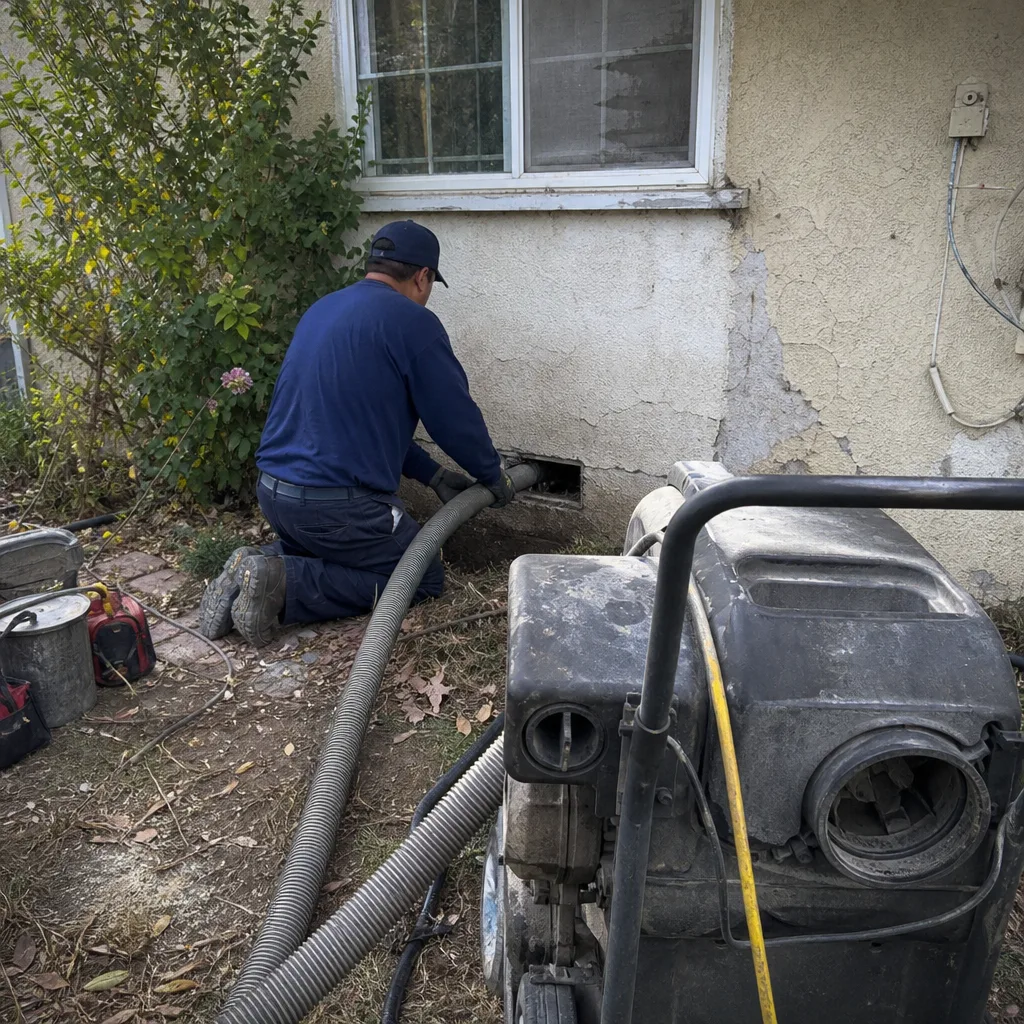
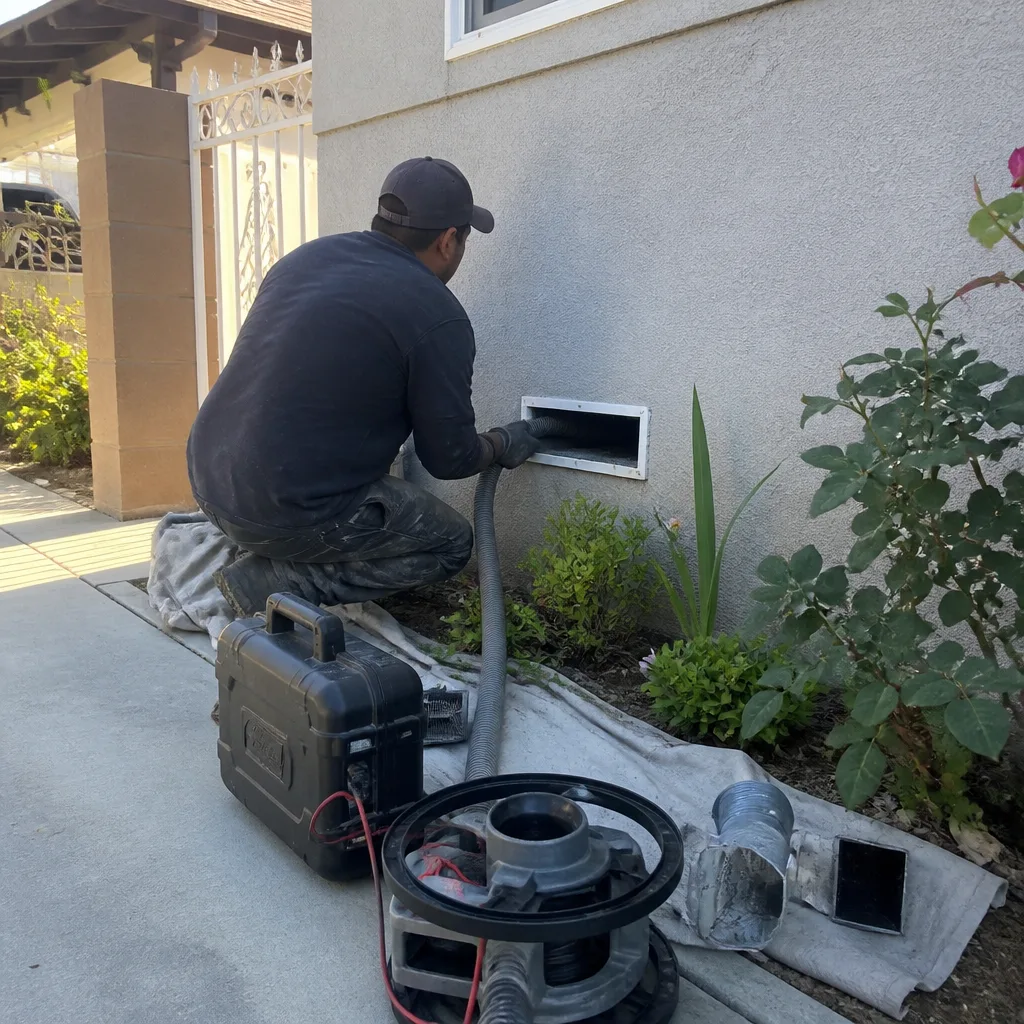
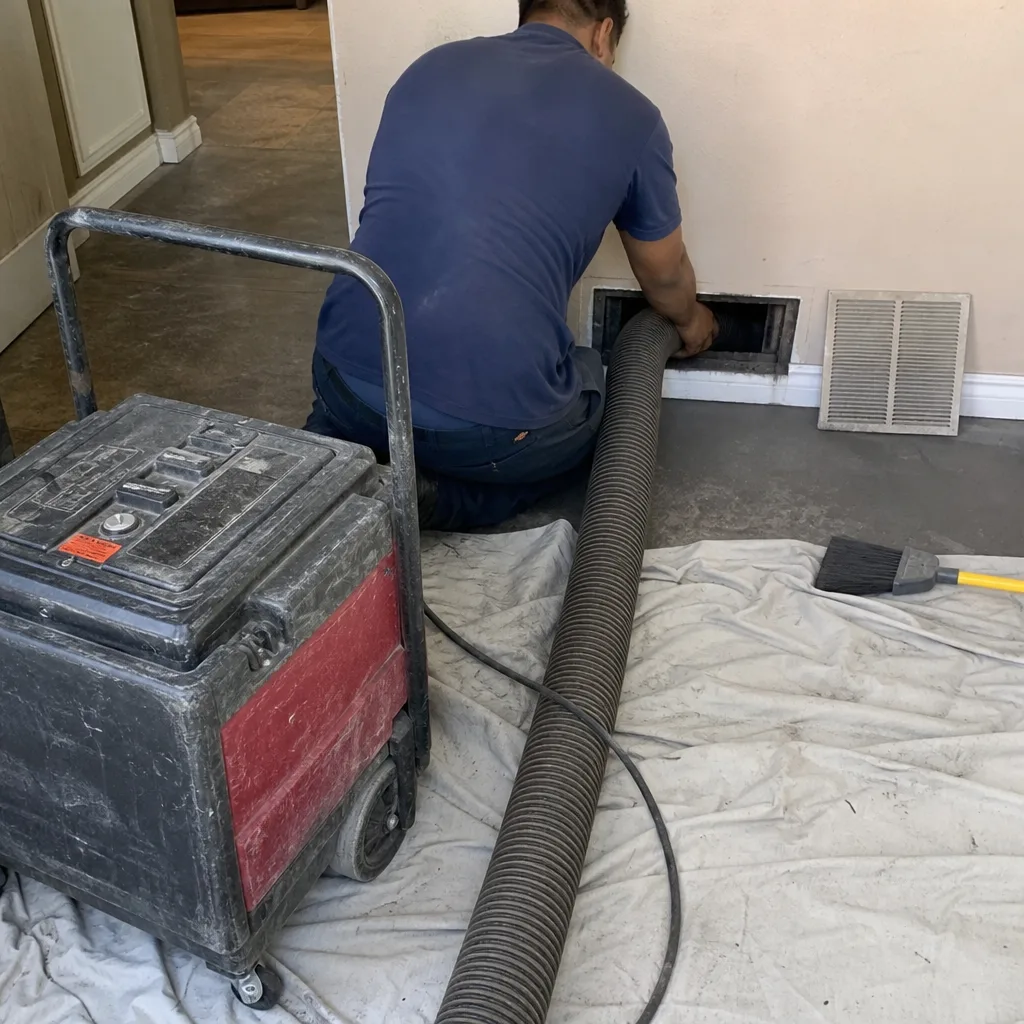
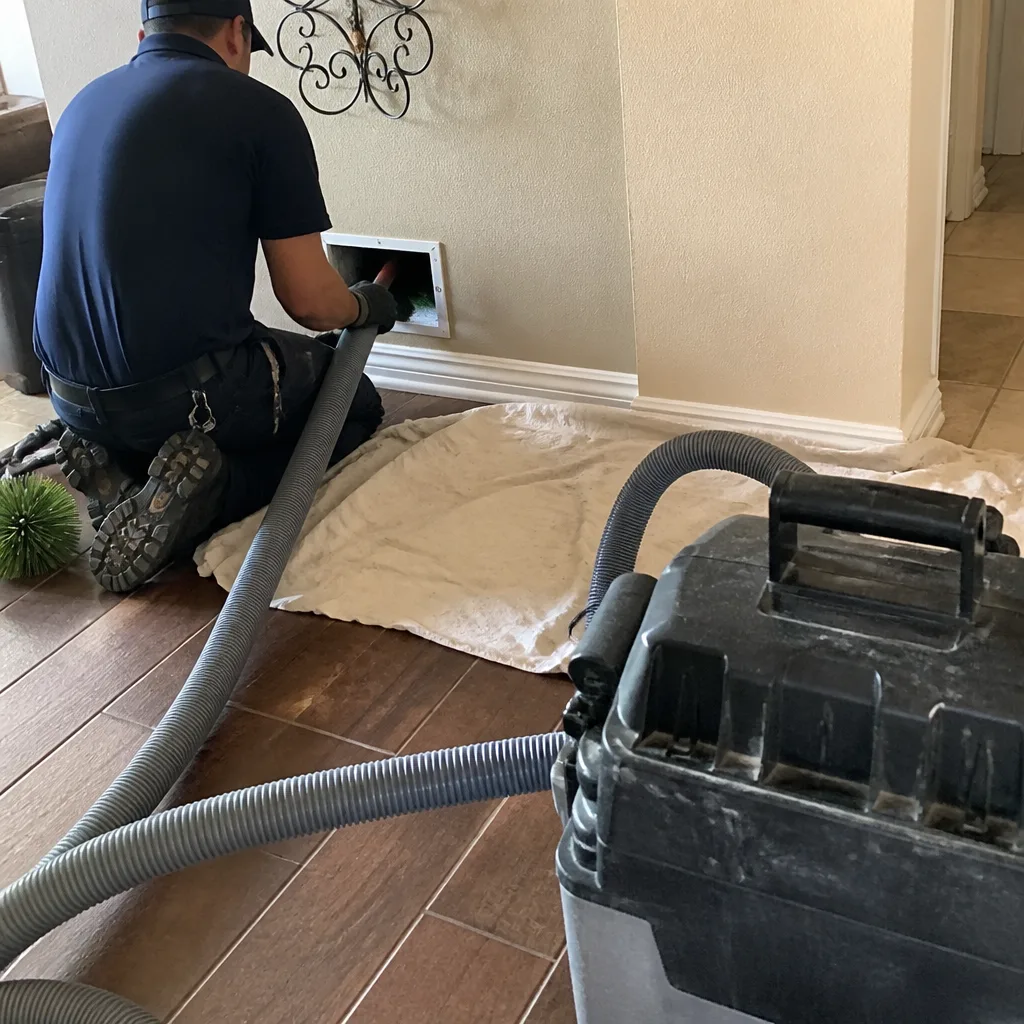
The containment approach matters here. When we clean post-renovation ductwork, we use Abatement Technologies containment equipment to prevent the dislodged dust from re-entering the living space during the cleaning process. The alternative, which we see from operators who don’t use containment, is a cleaning that pushes more particulate into the house than it removes. Containment matters as much as cleaning.
What a Post-Emergency Duct Assessment Actually Looks For
When a technician arrives at a Reseda home after a wildfire smoke event, an earthquake, or a renovation project, the assessment follows a specific protocol. This is what separates a real inspection from a quick look-and-quote. The technician is looking at specific locations where particulate and damage concentrate, and each location tells a different part of the story.
The Return Plenum
The return plenum is the box where the return air enters the air handler. It’s the first point of contact for every particle that comes through the system, and it’s where the heaviest deposition occurs. During a smoke event, the return plenum collects a dark, sticky film of smoke residue and combustion byproducts. During a renovation, it collects drywall dust and construction debris. The technician is looking for visible deposition on the interior walls of the plenum, which indicates what the rest of the system looks like downstream.
The Evaporator Coil
The evaporator coil sits directly downstream of the return plenum, and it’s where the airflow takes a turn. Any particle that didn’t deposit in the plenum has a second chance to stick to the coil. Smoke residue on an evaporator coil reduces heat transfer efficiency, which means the system runs longer to hit the same temperature. The coil is also the hardest component to clean properly, which is why we use Nikro HEPA-filtered vacuums and air-washing equipment designed for the task.
The Branch Ducts
Accessible branch ducts are inspected for particulate deposition, disconnected runs, and compression damage. After an earthquake, the branch ducts are where you’ll find the separation issues discussed earlier. After a smoke event, the branch ducts are where you’ll find a gradient of deposition, heavier near the plenum and lighter near the registers. The presence of any deposition in the branch ducts is an indicator that the entire system needs cleaning, not just the main trunk.
The Filter Condition
The filter tells you what the system has been pulling. A filter that’s caked with gray dust after a renovation confirms that the ducts are carrying the same material. A filter that smells like smoke after a wildfire event confirms that the filtration was overwhelmed. We inspect the filter as part of the assessment, and we often recommend upgrading to a higher-efficiency media filter after cleaning, especially in homes that have been through a smoke event.
Documentation for Insurance Claims: What to Gather Before and After
If you’re filing a homeowner’s insurance claim related to smoke or ash contamination of your HVAC system, the documentation you gather will determine whether the claim is approved. Insurance adjusters are skeptical of HVAC contamination claims because they can’t see the contamination from the living space. The evidence has to be gathered by a professional with the right tools, and it has to be presented in a way that connects the contamination to the covered event.
What to Document Before the Cleaning
- Photograph the visible evidence. This includes the filter, the return grille, and the register covers. If you can see deposition on these surfaces, document it with high-resolution photos, including a date stamp.
- Request a written assessment from the technician. This should describe what was found in each section of the system, using specific terms: “visible smoke residue on return plenum walls,” “particulate deposition on evaporator coil,” “disconnected flex duct at register boot.”
- Keep the old filter. This is physical evidence of what the system pulled through, and an adjuster may want to see it. Bag it and label it with the date.
- Document the timeline. Note the date of the wildfire event, the AQI readings during the event if you have them, and the date the system was turned off. This establishes a causal chain between the event and the contamination.
What to Document After the Cleaning
- Photograph the same locations that were photographed before, showing the post-cleaning condition. This proves that the cleaning was actually performed and demonstrates the contrast.
- Request a post-cleaning report from the technician describing what was removed and the condition of the system after the work. This is the after-report that validates the before-report.
- Keep the invoice. Insurance claims require proof of the cost of remediation.
Before-and-after documentation is standard practice for us on every post-emergency cleaning, not just when an insurance claim is anticipated. The documentation protects the homeowner in a dispute with the carrier, and it gives the homeowner verifiable proof that the work was actually done.
Filtration and Humidity Upgrades That Help Before the Next Event
The best emergency protocol is the one you never have to use. While you can’t prevent a wildfire or an earthquake, you can make your HVAC system more resilient to particulate events before they happen. As an authorized dealer for Aprilaire and Honeywell air-quality products, we’ve helped Reseda homeowners upgrade their filtration and humidity control in the same visit as a duct cleaning. The upgrades are not complicated, but they require equipment that most generalist HVAC contractors don’t stock.
A media filter cabinet with an Aprilaire or Honeywell high-efficiency media filter is a meaningful upgrade over the standard 1-inch filter slot. A 4-inch or 5-inch media filter has dramatically more surface area than a 1-inch filter, which means higher particulate capture with less airflow restriction. It won’t turn your system into a cleanroom, but it will capture a much larger fraction of the particulate during a moderate smoke event.
Humidity control is the second piece. The San Fernando Valley gets dry winds during wildfire season, and dry air makes particulate matter more irritating to the respiratory system. An Aprilaire whole-home humidifier or a Honeywell steam humidifier can maintain indoor humidity in a range that reduces the impact of particulate exposure. We install these units as part of a post-cleaning air-quality upgrade, and we service them as part of the system’s ongoing maintenance.
These upgrades are not cheap, but neither is an emergency cleaning after a smoke event that overwhelmed a 1-inch filter. The math is simple: the filter upgrade costs less than a single post-wildfire cleaning, and it protects the ducts from accumulating the particulate that would otherwise require the cleaning. This is the proactive play that most homeowners only discover after learning the hard way. Your dryer vent is a fire risk, not a convenience issue, and the same principle applies here: the ducts are a particulate reservoir, and the filter is the one thing between the outdoor air and everything inside them. If you want to protect the ducts, start with the filter.
Common Mistakes to Avoid
- Running the fan continuously during a smoke event. The fan pulls particulate into the ducts and deposits it across every interior surface. A filter that’s designed for dust is not designed for smoke, and the fan-only mode just makes things worse.
- Restarting the system immediately after the AQI drops. The particulate at rooftop level clears slower than the ground-level AQI suggests. Wait 24 to 48 hours, and expect the first cycle to push some residual particulate out of the registers.
- Waiving the duct cleaning after a renovation. Drywall dust and construction debris inside the ducts will damage the blower motor and circulate through the living space indefinitely. A post-renovation cleaning is not optional.
- Calling the insurance company before gathering documentation. Once a claim is opened, the adjuster’s timeline starts. Document everything before the cleaning, keep the old filter, and get a written assessment from the technician.
- Trusting a cheap cleaning service after a smoke event. A blow-and-go operator with a shop vac cannot remove smoke residue from duct surfaces. That residue is sticky and chemical-laden, and it requires professional agitation plus HEPA-filtered extraction. You’ll pay for the cheap cleaning and then pay for a real one later.
When to Call a Professional
You should call a professional if you smell smoke coming from the registers after an outdoor smoke event, if you see visible dust blowing from the registers after a renovation, if a specific room loses airflow after an earthquake, or if your energy bill spikes unexpectedly. These are all indicators that something has changed inside the ductwork, and the longer you run the system in that condition, the more the problem compounds. Air Duct Cleaning Reseda offers free estimates in Reseda. We bring Rotobrush rotary brush systems, Nikro HEPA-filtered vacuums, and Abatement Technologies containment equipment to every job. Call (855) 353-1653 to schedule an assessment. We’ll look at the system, tell you what we found, and give you an honest recommendation before any work begins.
Frequently Asked Questions
Emergency duct cleaning in Reseda typically ranges from $400 to $900 for a whole-home system, depending on the size of the home, the number of registers, and the severity of the contamination. Post-wildfire smoke residue or post-renovation drywall dust may fall at the higher end because the cleaning requires more passes and more time per register. Call (855) 353-1653 for a free, exact quote for your home. We give one flat price before work starts, and the price doesn’t change mid-job.
Yes, smoke residue can be fully removed from duct surfaces with professional rotary-brush cleaning and HEPA-filtered extraction, which is the equipment set we use on every job. The residue is sticky and chemically different from household dust, so it requires more aggressive agitation and multiple passes. The cleaning restores the duct surfaces to a clean condition, but the residue will return if the system is run through another smoke event without proper filtration.
We provide before-and-after photos of your ductwork, including the return plenum, the evaporator coil, and accessible branch ducts, so you can see the difference. We also provide a written report describing what was found and what was removed. You’ll know the work was done because you’ll be able to see it for yourself, not just take a technician’s word for it.
Ducts should be cleaned once after the smoke event has fully passed, and the timing matters: wait until the AQI has been below 100 for at least 48 hours before scheduling the cleaning so the outdoor air isn’t still pulling particulate into the system during the process. After the post-event cleaning, air duct cleaning in Reseda should be repeated every 3 to 5 years as routine maintenance, or sooner if you notice dust accumulation, musty odors, or reduced airflow.
Many homeowners insurance policies do cover HVAC contamination from wildfire smoke, but the claim requires documentation that connects the contamination to the covered event. That means a written assessment from a professional technician, before-and-after photos, and the old filter kept as physical evidence. We recommend documenting everything before the cleaning and calling your insurance company only after the evidence is gathered.
A disconnected duct run after an earthquake is a health issue and an energy issue, not typically a safety issue in the immediate sense. It pulls attic air into the return stream, which can introduce insulation fibers and other attic contaminants into the living space, and it wastes conditioned air into the attic. The repair is straightforward and falls under the air duct repair in Reseda scope. If you suspect a disconnected run, stop running the system until a technician can inspect and repair the connection.
Yes, and it’s the service most often forgotten in post-emergency planning. After a wildfire, the same particulate that deposits in your ductwork can also deposit in your dryer vent, where the added restriction increases the fire risk. After an earthquake, the dryer vent transition can separate, which allows lint and exhaust to blow into the wall cavity. Dryer vent cleaning in Reseda is a standalone specialty, and post-emergency inspection of the dryer vent should be part of your protocol.
The Bottom Line
Reseda’s wildfire and earthquake exposure creates specific and predictable HVAC emergencies that most homeowners are not prepared to handle. The preparation starts with the correct response in the first 24 hours: shut the system down during smoke events, check for disconnected duct runs after seismic activity, and never run the system through a renovation without a post-project cleaning. The cleanup starts with the right equipment: Rotobrush rotary brushes, Nikro HEPA-filtered vacuums, and Abatement containment. If you’ve been through a recent smoke event, earthquake, or renovation, call (855) 353-1653. We’ll assess the system, show you what we found, and tell you honestly whether a cleaning is needed. No scare tactics, no upsell pressure. Just the facts, with the documentation to back them up.
Written by the team at Air Duct Cleaning Reseda, serving Reseda since 2011.
See the difference
 Before
 After
 Before
 After
 Before
 After